
11/06/2018
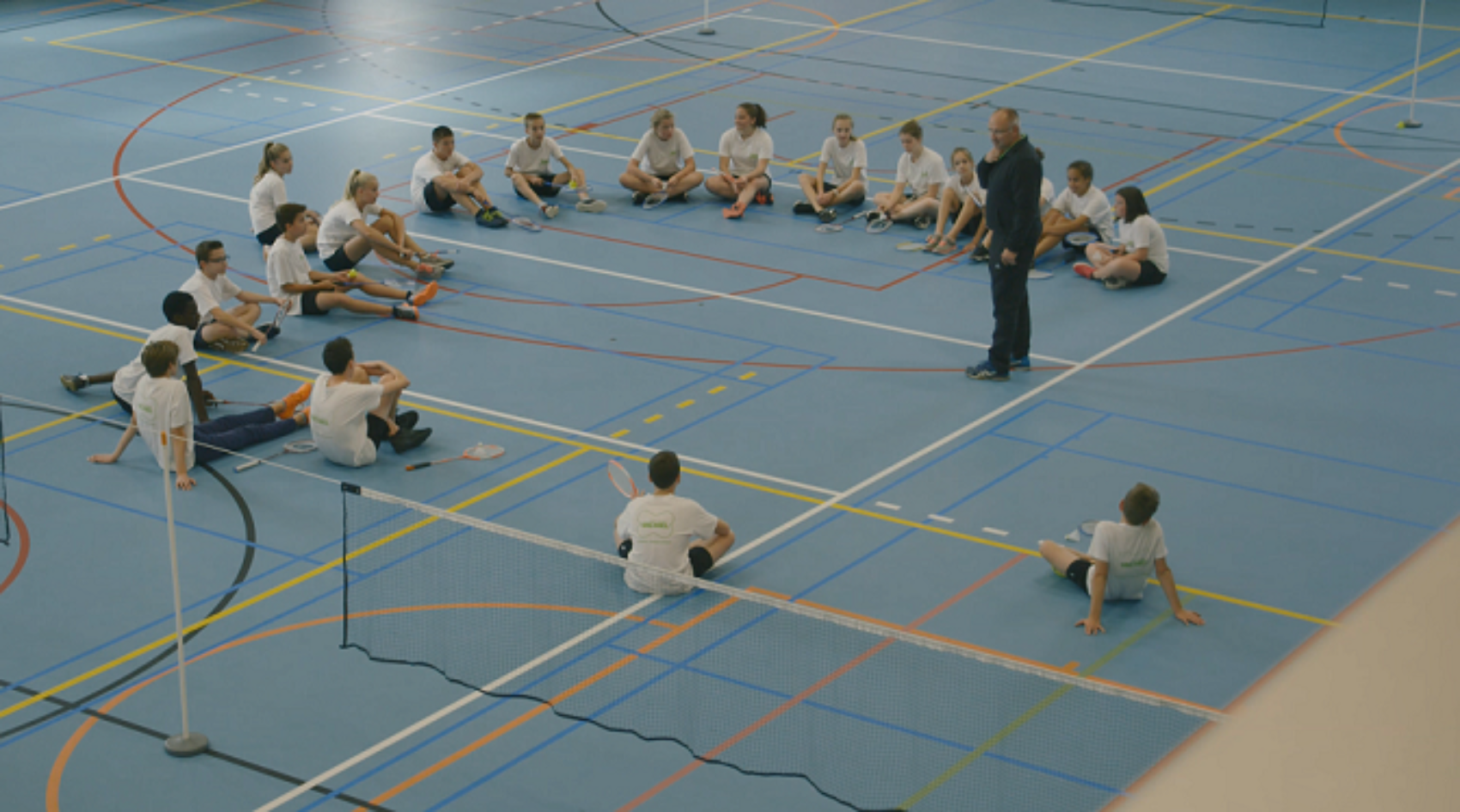
Multifunctional use or community use of school buildings has been high on the agenda of the Minister of Education’s office for several years now. Scholen van Morgen has also been fully involved in this since the programme’s launch.
What are the experiences of the school boards and the associations that use the infrastructure? What are the requirements for using a school for multifunctional purposes? And furthermore: what agreements are needed? You can read and see all this in this report.
In the city of Roeselare, we built 7 Scholen van Morgen for 2 school groups. In some of these schools, there is intensive multifunctional use. The school boards in question therefore have interesting experiences and a nuanced perspective on ‘ ’. Moreover, the same architectural firm designed 5 of those 7 projects.
The schools in question were conceived from the outset for use by external parties. The advantage of this is that the architects were able to implement specific measures to enable and encourage broad use. On the one hand, this concerns accessibility, for example a separate lockable entrance, but on the other hand it also concerns the visual presence of the buildings.
[Community schools] must also have an architectural and visual presence, so that people are drawn to them and feel inclined to use the space.
Lien Vansteenkiste, Architecten Groep III
School boards are opting for the multifunctional use of their school buildings to prevent the new infrastructure from standing empty. In this way, the governing bodies wish to give something back to society, as a voluntary quid pro quo for the subsidies they receive from the Flemish government.
By opening up schools to associations, local residents, local networks, and so on, they are simultaneously choosing to establish a concrete presence in the local community. Through multifunctional use, schools forge stronger links with the world around them.
The school groups and school management teams do point out, however, that clear agreements are essential for the smooth running of this broad use.
The school is no longer a closed space where the gates close in the morning and only open again at 4.30 pm.
Kris Pouseele, chair of the Arkorum school group
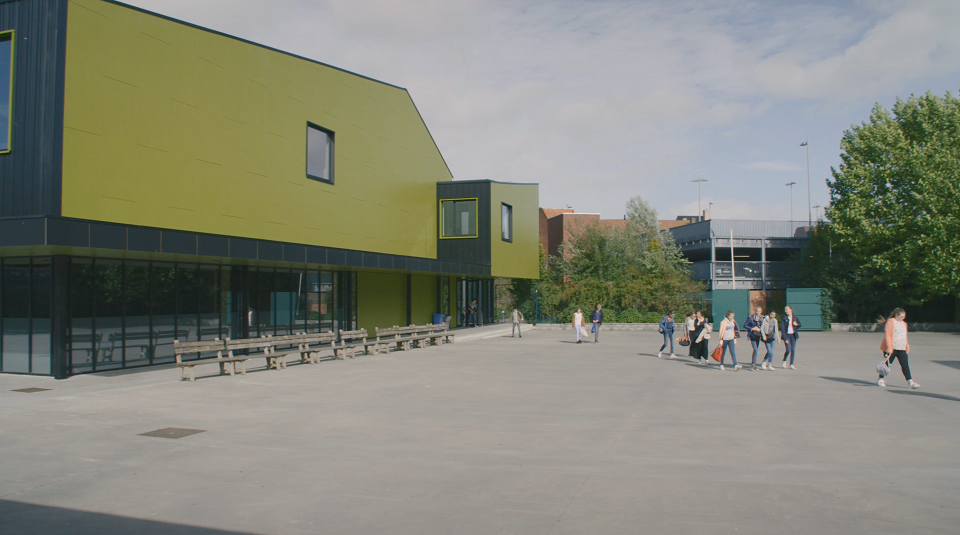
But the prime example is the Vrije Middelbare School (VMS) Roeselare. Together with Scholen van Morgen, the school built a new sports hall with six changing rooms, a storage room and a multi-purpose hall.
The VMS shares the facilities with another school during school hours. But there is also plenty of activity outside school hours. Every weekday evening, Knack Volley Roeselare (youth) and Knack Handball Team Roeselare (both youth and men’s teams) hold their training sessions there.
Even during the design and construction phase, the construction team, the school and the City of Roeselare worked together to create a sports hall that meets all requirements and wishes. For example, the sports court is 40 metres wide: perfect for competitive matches in sports such as handball, but not a given for school sports infrastructure.
All parties made a conscious decision to allow (only) two clubs to make regular use of the VMS sports hall. This ensures stability. It simplifies mutual arrangements, including those regarding keys, badges or any damage.
An added benefit for the school, the city and the sports teams themselves is that, in this case, many youth teams come to play at the VMS. This fosters interesting connections and cross-pollination.
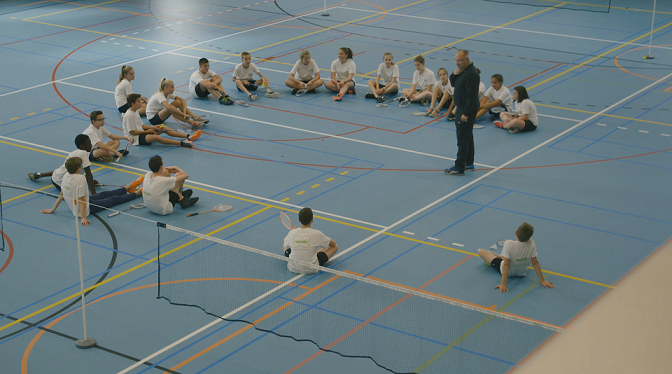
The community use of the VMS Roeselare is a success story for all parties involved. However, to turn the dream of maximising multifunctional use into a workable reality, we note two critical conditions:
We work closely with those two clubs, and this also ensures that the sports hall is still in perfect condition after a year of use.
Luc Vanrobaeys, Director of VMS Roeselare