
10/11/2016
They have built seven new schools as part of the Schools of Tomorrow programme. The last of the seven was completed just last month. All the other schools are now fully operational. A good reason to speak to Yves Demaertelaere, director and head of mainstream education at the Broeders van Liefde educational authority.
Congratulations on your seven completed Schools of Tomorrow. Have you visited these new buildings yourself yet? And if so, what are your first impressions?
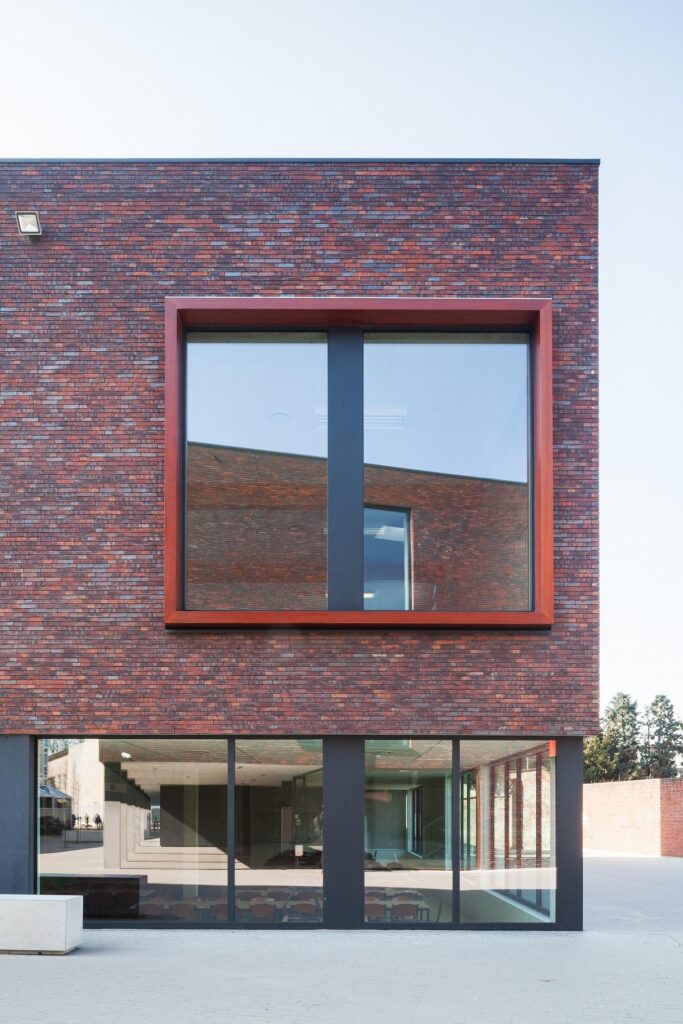
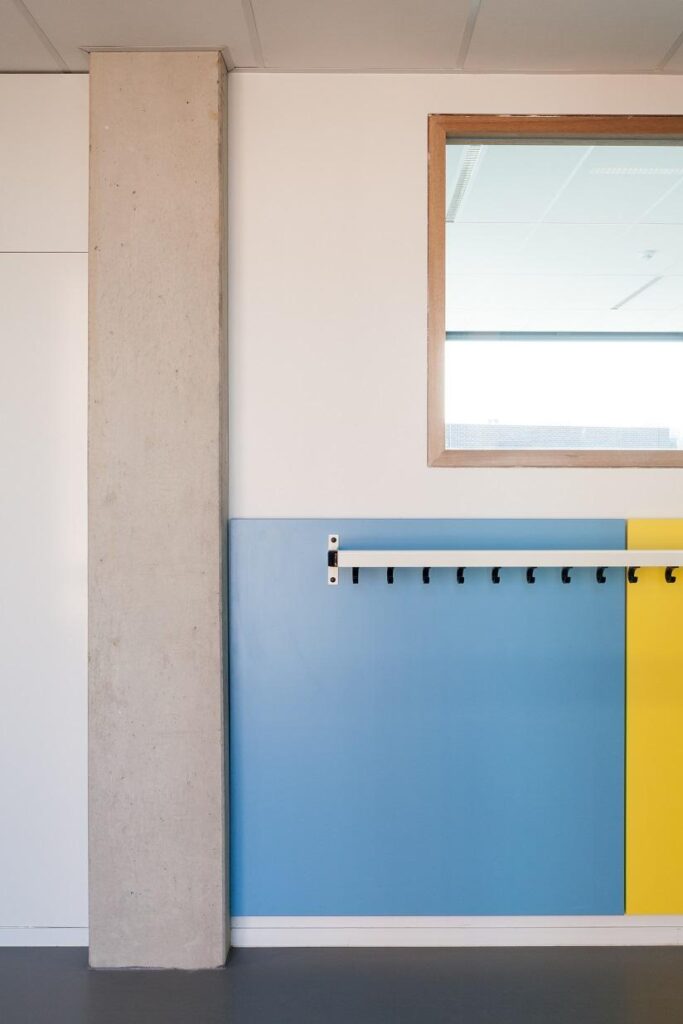
Yves Demaertelaere: “Of course, I’ve already taken the time to walk around the new buildings. Everyone is proud that a number of schools now have a new building for contemporary and high-quality education at the Brothers of Charity. Because the space makes a big difference. The new buildings have a completely different atmosphere to the old ones. It’s modern architecture with plenty of light, openness, warmth and bright colours – quite a contrast to what we used to have.”
What kind of feedback are you hearing from the field, from the management teams, and from the staff who work in the new school buildings every day?
Demaertelaere: “Mostly positive. School management and teachers are happy because their working, living and learning environment has a fresh atmosphere. A well-maintained building like this contributes to a stimulating environment where you can work with enthusiasm.”
In what way is modern, adapted infrastructure important for the objectives of your education? Was your pedagogical programme successfully translated into the final building?
Demaertelaere: “High-quality education requires high-quality infrastructure. More than ever before, there must be pedagogical comfort. The spaces must allow for alternative teaching methods. They must be able to respond flexibly to the needs of various types of groups and compositions, especially as we are also opening them up to the local community. There must be a good ICT infrastructure. There must be light and air. A building must not only be functional. It must also inspire. If the space radiates tranquillity, clarity and transparency, you start to think differently. The interaction between people and their environment creates a soul. In such an environment, pupils can learn with enthusiasm and look forward to coming to school. I believe the architects have succeeded in translating this educational vision into an architectural concept.”
As for the DBFM process, how did that go for you?
Demaertelaere: “May I give a nuanced answer to that? Thanks to DBFM, we have seven new schools over a 10-year period. That is unprecedented within our organisation. We are satisfied with the overall concept, but that does not mean there aren’t areas for improvement. DBFM is not an easy process. When we boarded the DBFM train in 2007, not everything was clear yet. No one had any experience with it. Not us, and not the contractors either. The final cost and the exact procedure, for example, were still not sufficiently clear. Initially, it was assumed that we would be able to build at 90% of the normal cost. That turned out to be overly optimistic.”
Did you, as the organising authority, have sufficient say, and do the school buildings now meet the needs and expectations you had beforehand? Were you well supported through all the key stages?
Demaertelaere: “During the construction process, we also occasionally got the impression that the legal procedures and rules were more important than the realisation of the building plan, but we always managed to resolve things. That was mainly down to the good cooperation between your departments and our buildings department. The biggest advantage of DBFM remains that it is a procedure that is faster compared to the traditional AGIOn subsidy scheme.”
I have heard on several occasions that the infrastructure needs are still significant within the Brothers of Charity… What are your plans regarding this in the near or distant future? If possible, would you opt again for an approach such as that of Schools of Tomorrow – and what do you see as the main pros and cons of that approach?
Demaertelaere: “The school portfolio at the Brothers of Charity is no different from the average in Flanders. We too do indeed still have infrastructure needs for which we are seeking affordable solutions. A PPP formula is feasible, certainly if the funding is adequate. The total financial burden will be the biggest factor. In fact, the PPP construction concept should be able to be cheaper than it was previously. We are prepared to consider new formulas provided that the long-term outlook offers sufficient guarantees that it can be more efficient and cheaper than traditional financing.”
In what ways and in which areas (positive and negative) does the Schools of Tomorrow approach differ for you, as the organising authority, compared to conventional financing?
Demaertelaere: “As I have already said, the biggest advantage is speed. Realising a construction project via standard financing can easily take 15 years. DBFM is faster, although the original promise of 3 to 5 years was not met. It still took us 9 years to fully realise the seven projects using DBFM.”